Warren Buffett keeps turning to the same ETF for a reason
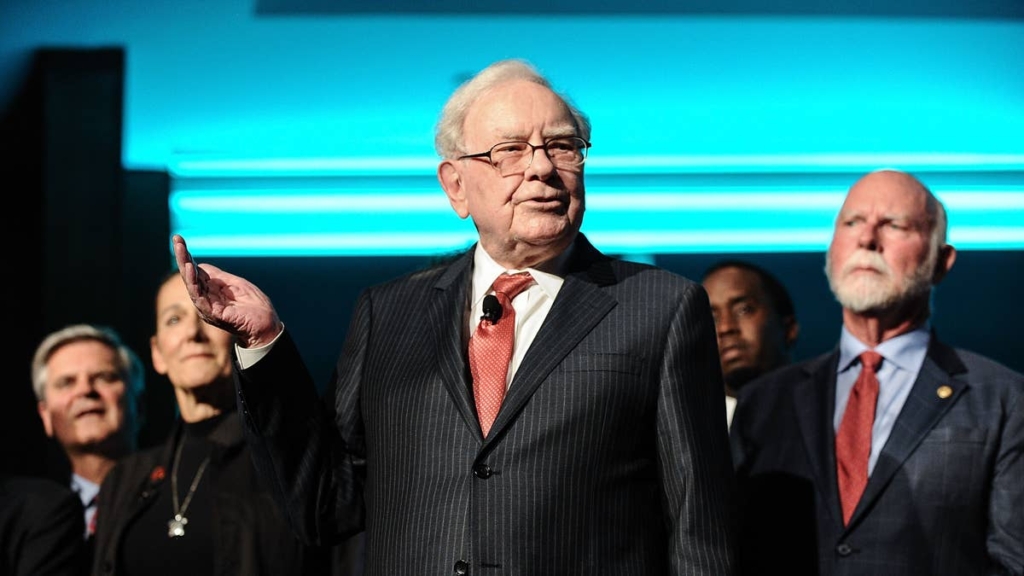
Warren Buffett spent six decades beating the market in a way almost every investor tries and fails to match. But the advice he gave everyday people investing on their own had nothing to do with picking the next great stock at all.
His own portfolio at Berkshire Hathaway tells a more complicated story today, one that is shifting under new leadership, even as his original advice to regular investors has not changed.
Warren Buffett keeps pointing to Vanguard ETF fund
Berkshire stock delivered a compound annual return of roughly 19.7% during Buffett’s years of run as CEO, meaning a $500 investment in 1965 would have grown to about $24 million by the time he stepped down at the end of 2025, according to The Motley Fool. Buffett never expected ordinary people to replicate that kind of run.
Instead, he spent years pointing everyday investors toward low-cost index funds rather than individual stock picking. He first named Vanguard specifically in a 2013 letter describing instructions he had written into his own will, telling the trustee to put 90% of his wife’s inheritance into a very low-cost S&P 500 index fund and suggesting Vanguard by name.
He repeated a version of that advice in Berkshire’s 2016 shareholder letter and again at the 2021 annual meeting.
More Warren Buffett:
- Warren Buffett reveals he broke his own investing pattern
- Warren Buffett has a blunt take on today’s market
- Warren Buffett pulls no punches on stock market for 2026
The reasoning comes down to cost. The Vanguard S&P 500 ETF charges an expense ratio of just 0.03%, meaning an investor with $10,000 parked in it pays roughly $3 a year, a rounding error next to what most actively managed funds charge, according to The Motley Fool.
That recommendation has aged well so far. The fund has grown to more than $950 billion in assets and gives investors exposure to 500 of America’s largest companies across every major sector of the economy, with any companies that no longer meet the index’s criteria.
The index behind the ETF has grown lopsided
Getting into the S&P 500 is not automatic just because a company is large. Membership requires market capitalization, liquidity, public float, and financial-viability requirements, including a record of consistent profitability, and even then the S&P 500 Index Committee makes the final call on which companies actually make the cut.
Because the fund weights companies by market capitalization rather than giving each one equal footing, the largest firms carry outsized influence over its returns compared with the smallest. It’s technically made up of roughly 500 companies across 11 sectors of the economy.
That structure has made technology the dominant force in the index today. The sector now carries a 36.6% weighting, driven largely by five companies worth $1 trillion or more each, including Nvidia, Apple, Microsoft, Broadcom, and Micron Technology.
The AI boom explains much of that shift. AI growth accelerated once OpenAI’s ChatGPT crossed 100 million users in early 2023. If the technology’s contribution over the past three and a half years is excluded, the S&P 500’s total return drops from 101% to 63%, The Motley Fool reported.
The gap shows how much of the index’s recent performance is riding on a handful of names rather than being spread evenly across the market.
Daniel Zuchnik / Getty Images
Buffett’s own stock picks tell a different story
Buffett’s retirement as CEO on Dec. 31, 2025, handed Berkshire’s stock portfolio to his longtime successor, Greg Abel, who wasted little time putting his own stamp on it.
Buffett remains chairman and continues to advise on major decisions. Abel has kept concentrating capital in a handful of best ideas rather than spreading it thin, with five stocks making up the bulk of the portfolio as of late summer, led by Apple at roughly 20% of invested assets.
Alphabet has become Abel’s most visible addition since taking over. He more than tripled Berkshire’s Alphabet stake during the first quarter of 2026, and then added a $10 billion private placement in June.
While Warren Buffett initiated Berkshire’s original Alphabet investment in 2025, Abel oversaw the subsequent $10 billion investment after consulting with Buffett.
That kind of concentrated conviction has always been part of the Berkshire playbook, not something new to Abel. Berkshire first bought Coca-Cola in 1988, and by 1994 had spent $1.3 billion completing the position.
The annual dividend from that single investment grew from $75 million in 1994 to $704 million by 2022, as reported by TheStreet, illustrating the power of holding a high-quality business for decades.
American Express tells a similar story. Berkshire completed its purchases in 1995 for $1.3 billion, and the position’s annual dividends grew from $41 million to $302 million by 2022.
By mid-2026, the position is now worth nearly $46 billion. Meanwhile, Buffett never sold either position, despite the opportunities and temptations to trade.
What it means for everyday investors
Buffett’s own caution about the current market adds one more layer worth considering. Berkshire has been a net seller of stocks in 14 of the last 15 quarters, selling roughly $175 billion more than it bought since October 2022.
This is despite the Buffett Indicator, which compares total market value to GDP, hitting an all-time high of 240% in August, according to one widely followed measure, marking a record high, as reported by TheStreet.
Buffett has stayed consistent about what would change that posture. Speaking to CNBC, he noted that three separate 50% Berkshire declines occurred during his tenure. He said anything short of a genuinely large drop does not meet the bar for deploying the company’s cash more aggressively, a threshold he reaffirmed as recently as this year.
None of that changes the advice he gave to everyone else. Whether Berkshire’s professionals are buying Vanguard ETF, trimming other positions, or sitting on record cash waiting for the right moment, the index fund path Buffett pointed regular investors toward back in 2013 never depended on guessing what the pros would do next, and the simple math behind it.
A low-cost fund that owns the market’s winners automatically, held patiently for decades, has already turned a modest sum into real wealth once.
Related: Warren Buffett has a stark message for stock market investors